



Learning to code is exciting, but there comes a point when watching tutorials is no longer enough. You need to build something of your own.
Whether you are learning HTML, CSS, JavaScript, or backend technologies, real projects can help you understand how coding works outside a classroom or tutorial. They give you an opportunity to experiment, make mistakes, solve problems, and gradually become more confident.
If you are planning to learn Full Stack Web Dev online, project-based learning can be a valuable part of your journey.
Why Are Real Projects Important?
Imagine learning how to ride a bicycle only by reading instructions. You may understand the basics, but you won’t gain confidence until you actually ride.
Coding works in much the same way.
When you build a project, you have to decide how different pieces of code should work together. You may face errors, unexpected results, or problems you didn’t encounter while following a tutorial. Solving these problems is where much of the practical learning happens.
Real projects can help you:
- Apply concepts you have learned
- Improve problem-solving skills
- Understand how technologies work together
- Practice debugging
- Build confidence
- Create work for your portfolio
What Projects Can Beginners Build?
You don’t need to start with a complicated application. In fact, simple projects are often a better starting point.
Here are a few ideas:
1. Personal Portfolio Website
Create a website that introduces you, displays your skills, and showcases your projects. This is a great way to practice HTML, CSS, responsive design, and basic JavaScript.
2. To-Do List
A to-do application can help you understand how users interact with a webpage. You can add features such as adding, editing, completing, and deleting tasks.
3. Weather Application
A simple weather app can introduce you to APIs and help you understand how websites receive and display information from external services.
4. Blog Website
Building a basic blog can help you explore page layouts, forms, databases, user accounts, and backend functionality as your skills improve.
5. Simple E-Commerce Website
Once you are comfortable with the basics, you can create a small shopping website with product pages, categories, user login, and a basic cart system.
The goal isn’t to build the next big online store. The goal is to understand how a complete web application works.
What Should You Learn Before Starting Projects?
If you’re a beginner, don’t worry about learning every technology before writing your first project.
A simple learning path is:
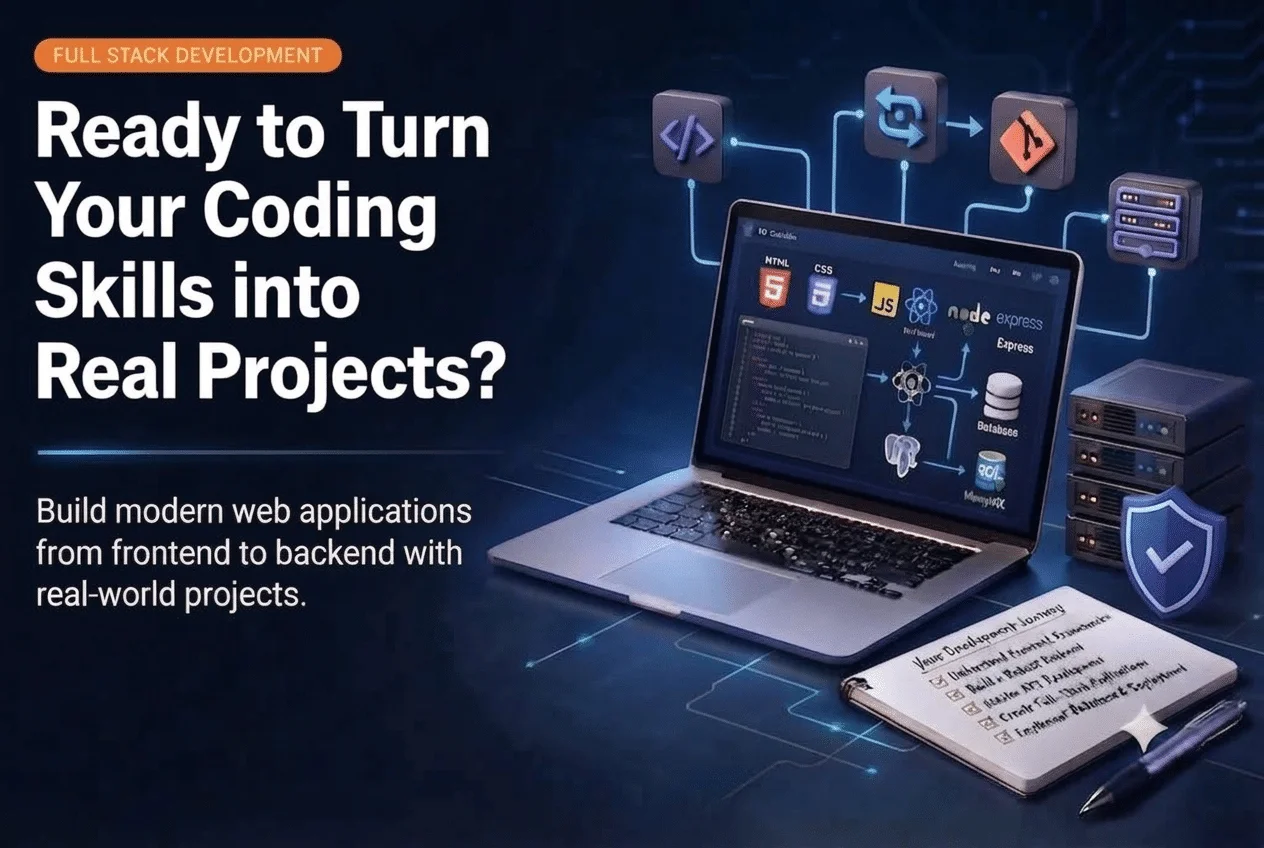
HTML → CSS → JavaScript → Front-End Development → Backend Development → Database → APIs → Full Stack Projects
HTML helps you create the structure of a webpage. CSS controls its appearance, while JavaScript adds functionality and interaction.
Once you understand these basics, you can explore backend development and databases to learn how the parts users don’t see work.
This step-by-step approach can make Full Stack Web Development easier to understand.
How Can Online Learning Help?
Online learning gives beginners flexibility. You can learn a concept, practice it, and then immediately use it in a project.
A Full Stack Web Dev online course can provide a structured learning path instead of requiring you to search for every topic separately.
When choosing an online course, look for practical assignments, project work, updated content, and clear explanations. A course that encourages you to build along the way can make learning more engaging.
However, the course itself is only one part of the process. Your regular practice matters just as much.
Don’t Be Afraid of Coding Errors
One of the biggest lessons in programming is that errors are normal.
Your first project may not work perfectly. A button might not respond, a page might look different on mobile, or your application may show an unexpected error.
That’s okay.
Instead of copying a solution immediately, try to understand what went wrong. Read the error message, check your code, test different solutions, and use reliable documentation when needed.
Every problem you solve adds to your practical experience.
How Can You Build a Strong Project Portfolio?
Once you have completed a few projects, organize them into a simple portfolio.
For every project, explain:
- What the project does
- Which technologies you used
- What problem it solves
- What you learned
- Which features you developed
You can also keep your code organized and use version control tools such as Git to track your work.
A portfolio doesn’t need dozens of projects. A few well-explained projects that demonstrate your understanding can give people a clearer idea of what you can build.
Learn, Build, Improve
The journey from a beginner to a confident developer doesn’t happen overnight. It comes from consistent learning and practice.
Don’t wait until you know everything before starting your first project. Start small, make mistakes, solve problems, and improve your project step by step.
If you’re learning Full Stack Web Dev online, try to spend some time building alongside your lessons. The combination of learning concepts and applying them to real projects can help you develop practical web development skills.
Your first project may not be perfect and that’s completely fine. Your first project is not supposed to show how much you know. It’s supposed to help you learn how to build.
Meta Title:
Turn Coding Skills into Real Projects | Full Stack Web Dev
Meta Description:
Learn how to turn your coding skills into real projects with practical tips, beginner-friendly project ideas, and full stack web development guidance.
URL Slug:
turn-coding-skills-into-real-projects
Primary Keyword:
Full Stack Web Dev online
Secondary Keywords:
- Full Stack Web Development
- Full Stack Development Course


